The Room With No Windows
And what it taught me about the life I'd been postponing
The meeting room had no windows.
I remember that detail with strange precision — because somewhere in the middle of a three-hour session reviewing a system architecture proposal, I realised I hadn't seen natural light in four days. Not because the building lacked windows. The building had plenty. I just hadn't been near one.
This was 2024. I was a senior consultant at a major insurance company, and by every conventional measure, things were going well. Important projects. A good salary. A calendar full of the kind of meetings that mean you matter.
But sitting in that room, fluorescent light humming overhead, I noticed something I'd been carefully not-noticing for a while: I was exhausted in a way that a weekend couldn't fix.
The Narrow Line
There's a narrow line between professional success and personal depletion. I'd crossed it so gradually that I hadn't felt the step.
I wasn't burned out in the dramatic sense — no collapse, no breakdown. I was functioning perfectly. I was just... absent. Present in every meeting, absent from my own life. And the irony wasn't lost on me: I'd spent three decades helping organisations become more efficient, more coherent, more aligned with their core purpose — while quietly neglecting those same questions about myself.
What do I actually value? Not in the abstract. In the Tuesday afternoon.
The Decision That Surprised Me
I took a sabbatical.
Not a holiday. Not a few weeks off between jobs. A deliberate stop — with no fixed plan for what came next.
For someone who had structured their life around plans, deliverables, and measurable outcomes, this was deeply uncomfortable. And then, gradually, it became the most useful thing I'd done in years.
I started reading differently. Less business strategy, more philosophy. I found my way to Stoicism — not the pop-science version that tells you to take cold showers and wake up at 5am, but the original texts: Marcus Aurelius writing private notes to himself during a war. Seneca calculating exactly how much of his remaining time he was wasting. Epictetus, once a slave, teaching a framework for inner freedom so precise it still holds up after two thousand years.
What struck me was this: these weren't people who had opted out of a demanding world. They were operating at the highest levels of pressure imaginable. They'd just figured out where the real work was.
What I Found on the Other Side
Wellbeing-now.com is what grew out of that period.
Not a brand. Not a business plan. A genuine attempt to share what I've learned — and what I'm still learning — about living well in the second half of a full life.
I'm 55. I've had the career. I've had the windowless room. I've had the Saturday morning where the only thing on the agenda was to sit quietly and figure out what I actually think.
That last one turned out to be the hardest — and the most valuable.
On this site, I write about five Stoic principles that have genuinely changed how I move through a day. About the PERMAH framework — a research-based model of wellbeing that gives structure to what 'thriving' might actually mean. About what the data from my own wearables has taught me about sleep and longevity. And about the slow, non-linear process of rebuilding a life around what matters.
I'm not here to tell you what to do. I'm here to share what I've noticed.
If you're somewhere in the middle of your own recalculation — wondering if the pace is sustainable, if the success actually satisfies, if there's a different way to hold the next chapter — then you're exactly who I'm writing for.
One Question to Start
Before you read anything else on this site, take thirty seconds with this:
When did you last do something that cost you nothing — no status, no productivity, no performance — and felt completely worthwhile?
That gap, between now and whenever you're remembering, is the space this site is about.
Welcome.
— Rüdi
Ghost setup notes (delete before publishing):
- Title:
The Room With No Windows - URL slug:
about - Tags:
personal-story,sabbatical,life-transition - This page can double as About page AND Blog Post 1 — in Ghost, set it as a Page with slug
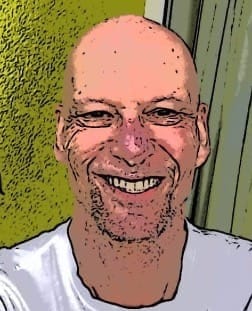
about, then also create a Post version with the same content (pinned to top). - Add your photo (ToonCamera 2.jpg or 4.jpg) after the opening quote or at the top.
- Once Ghost is live: update "On this site, I write about..." to include actual links to your sections.
